Friday, October 28, 2011

HCPC Files Opening Argument in Livestock Grazing "Categorical Exclusion" Case

As previously reported, HCPC filed suit last winter to protect close to a half-million acres spanning three of eastern Oregon's National Forests--the Wallowa-Whitman, Umatilla, and Malheur--from the negative effects of livestock grazing. This past week, we filed our opening argument in the federal District Court of Oregon challenging the Forest Service's abuse of its authority under a 2005 Appropriations Rider by exempting the renewal of 10-year grazing permits for large, contiguous blocks of land from full environmental review and the public participation process.

These public lands contain a variety of special resource conditions that demand a thorough effects analysis. Some are located within areas Congress set aside for heightened protection such as the Hells Canyon National Recreation Area, and the corridors of the Imnaha and North Fork John Day Wild & Scenic Rivers, and all contain a multitude of federally threatened or sensitive fish, wildlife, and native plant species, unique habitats and already water-quality impaired streams.

In fact the agency's abuse was so widespread in regards to the Umatilla National Forest that it categorically excluded from environmental review livestock grazing on close to one-quarter of this 1.4 million-acre National Forest (comprising nearly all of the Heppner Ranger District on the Forest's west end, See Heppner District map below). The lands and sensitive waterbodies at issue in this case have been grazed by livestock for over a century, but in most cases the Forest Service has never conducted a thorough review of the negative, and potentially significant, environmental effects to the many special resources that inhabit these areas.

The Forest Service's response to our arguments is due mid-December. Several of the livestock producers that hold grazing permits for these public lands have also hired attorneys to intervene in the case and argue against the government's need to conduct a full and public environmental analysis.

We hope to resolve this case by early next year to ensure these special areas and resources get the overdue protection they deserve. Stay tuned for future updates!

Staff Attorney, Jennifer Schwartz

Wednesday, October 19, 2011

"The Last Mountain" in La Grande

By Brian Kelly, HCPC Restoration Coordinator

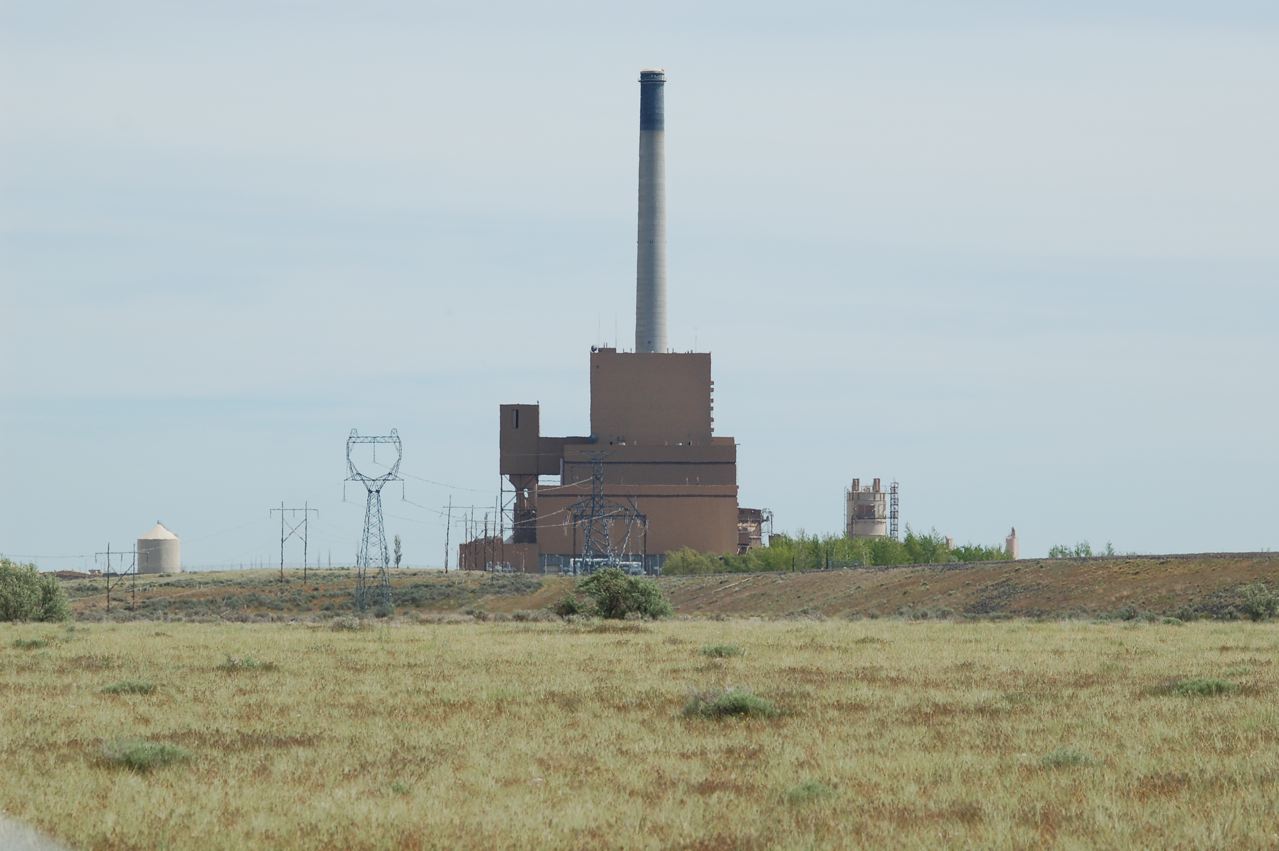
Photo of Oregon's only coal-fired electric plant at Boardman (photo courtesy of Columbia Riverkeeper).

Coming soon to a theatre near HCPC is fascinating film about coal in America. The Last Mountain tells the story of people in rural Appalachia fighting back against a large energy corporation bent on destroying a mountain to feed the hunger for coal.

“Mountain Top Removal” is a process where mountains are literally blown apart with dynamite to expose seams of coal. Forests are destroyed forever. Creeks are obliterated and the valleys downstream flooded. Wildlife habitat is gone. Local people suffer from high rates of cancer and autism. The explosives used each week equal the force of the bomb dropped on Hiroshima during World War II. And all of this goes on today right here in the United States of America.

People outraged over environmental and social destruction in Appalachia organized at the grassroots level and began non-violent resistance against the Massey Energy Corporation. The corporation seems to buy politicians and ignore the law with impunity. Robert F. Kennedy Jr. got involved and has helped the local activists in their fight against the corporate giant. The Last Mountain http://thelastmountainmovie.com/film/ tells this story cinematically and in a compelling way.

I am pleased to be a member of a panel discussion that will follow the screening of The Last Mountain on Friday, October 21 at 5:30 PM at the Granada Theatre, 1311 Adams Avenue in La Grande.

I will be proud to speak about HCPC’s success in stopping the burning of coal at Oregon’s only coal-fired electric plant near Boardman. The Boardman coal plant has been shown to pollute the air over the Eagle Cap and Hells Canyon Wilderness Areas. The plant is Oregon’s largest stationary source of acid rain causing sulfur dioxide and haze producing nitrogen oxides. It is the state’s second largest source of mercury pollution. HCPC and our allies recently settled a lawsuit whereby the plant will stop burning coal by 2020, reduce pollution in the interim period, and fund environmental projects including restoration work in the Eagle Caps and Hells Canyon.

The panel discussion will focus on energy production and use as well as what people can do at the local level to conserve energy and promote renewable energy.

The Last Mountain will be shown as part of The Eastern Oregon Film Festival http://eofilmfest.com

The film is sponsored by Oregon Rural Action http://oregonrural.org/ .

Thursday, October 6, 2011

Objection period open on Cove II WUI Project

The Cove II Wildland Urban Interface (WUI) Project Environmental Assessment has been released for public comment beginning the “Objection Period.” This project is a little different than others because it’s a Healthy Forest Restoration Act (HFRA) project, which is executed under a streamlined process. These projects are supposed to follow the Forest Plan while reducing fuels in ecologically appropriate areas in order to protect at-risk communities. Unfortunately, the Forest Service has taken a rogue approach with the Cove II WUI project, which proposes no less than four amendments to the Forest Plan for 1) logging in Late Old Structure (old growth) that is below historic range of variability, 2) logging in allocated old growth, 3) Relocation of Research Natural Area Boundary, 4) Logging in Management Area 6, Backcountry. In addition to these well-known extremely controversial aspects of the Cove II WUI proposal, the proposal would log in more roadless forests than any proposal I have seen over the past 3 years of monitoring timber sales across Northeast Oregon.

HCPC has gone above and beyond our duty to communicate with the Forest Service about these concerns, sending numerous correspondences to the Agency based on sophisticated GIS analysis, field work, and extensive review of the proposal in light of the peer-reviewed literature, in addition to our official comments. So far these comments have resulted in very little changes to the proposed action. In addition HCPC has hosted two public presentations on this project, one in La Grande and one in Cove. Local concerns are very high regarding logging in old growth and roadless forests for the purpose of extending backcountry fire suppression tactics further across the landscape than they have ever been, in contradiction to the best available science in numerous ways.


Presentation on Cove II WUI, Sept. 2011, Cove Oregon.


Whereas the original Cove WUI project was focused in the lower to mid-elevation forests of Mill Creek, near the community of Cove, the Cove II WUI proposal extends across a much larger landscape threatening National Forest resources at an alarming scale. Allen et al. (2002) states that restoration should be aimed at resetting ecosystem trends toward an envelope of “natural variability.” They caution that “impatience, overreaction to crown fire risks, extractive economics, or hubris could lead to widespread application of highly intrusive treatments that may further damage forest ecosystems.” This is exactly what the Cove II WUI proposed action threatens to do.

On a recent field trip to the Cove II WUI project area, we visited two timber sale units. One was a moist old growth forest with a closed canopy providing unique wildlife habitat for species such as marten, goshawk, and pileated woodpecker. This forest type is below its historic range of variability in the project area due to previous logging. The old growth unit is contiguous with the Castle Ridge Roadless Area and within potential Wilderness. The proposed action would commercially thin this unit, and also log heavily in patches, punching holes into the this multi-layered closed forest canopy. In these areas the Forest Service will plant their "desired species."

Cool moist old growth grand fir forest that is contiguous with the Castle Ridge Inventoried Roadless Area and designated as potential wilderness by the Forest Service slated for commercial thinning, and patch cut openings under Cove II WUI.

Tractors will be used to log in some of these rare old growth stands causing long-term soil damage, risking spread of invasive weeds, and the feeling of primeval forest, lost. Commercial logging will ruin potential wilderness quality. The Forest Service uses arm-waving regarding fire suppression tactics to attempt to justify these actions. Meanwhile the peer-reviewed science has pounded nails so tight into the coffin of these outdated ideas of commercially logging our last remaining old growth that these actions must be viewed as an excuse to log. Next we visited another moist forest unit that was previously heavily logged. HCPC did not have issues with the proposed logging in this previously logged area, which comprises the majority of the Cove II WUI project area units.

The Cove WUI II Project should protect the community and firefighters and also protect the areas outstanding natural values, especially the moist old growth forests that are rare due to extensive previous logging, the roadless forests that provide high quality wildlife habitat, and the Eagle Cap Wilderness that should be buffered from any logging activities. The proposed action does not achieve this balance and threatens old growth moist forests and roadless forests with tractors and logging, and road building directly adjacent to Oregon's largest Wilderness area. The Forest Service should respect the key conservation issue shared by the vast majority of Oregonians, to protect our last remaining old growth and roadless forests, while moving forward with the fuels reduction in previously logged forested areas.

by David Mildrexler
Ecosystem Conservation Coordinator
Hells Canyon Preservation Council

Thursday, September 29, 2011

Where The Wild Things Are, and Are Not

"There are some who can live without wild things, and some who cannot." - Aldo Leopold

Two mornings ago I saw a live porcupine ambling along the side of a backroad. It was the first live porcupine I had seen in years. I worry that we will turn around one day and the porcupines will be gone. I used to see them several times in the fall and spring, twenty years ago. You'd see at least 4 or 5 porcupine carcasses in the road back then pretty much every year. Then there were 1 or 2 carcasses a year, and then maybe 1 every couple years, and no sign of live porcupines. I am inordinately glad to see a live porcupine again, and wished it well.

That same morning I saw a mature bald eagle on the Grande Ronde River just south of Elgin. Seemed early in the year to see one there - usually they show up mid to late winter on that stretch of the river, at least for the last few years. Before that, it was more unusual to see one, and in my lifetime, bald eagles were on the verge of extinction. I love seeing them return again to these rivers.

The ospreys are off the nest now on the boxes I check on my way towards La Grande. Every summer now I watch the young, so grateful for the nest boxes put up for the ospreys to use. Watching the return of ospreys to the Grande Ronde and Indian Valleys celebrates a genuine success story for the return of another native species back from the edge of oblivion.

Wildlife asks so little to survive and thrive - putting up a nest box, stopping use of DDT, slowing down when we drive through a wildlife corridor, leaving some snags when we log, planting some native shrubs and wildflowers - often no more than a small margin of tolerance and forbearance.

Since I was little, I have been one of those Aldo Leopold talked about, when he wrote there are some who cannot live without wild things. In the 7th grade I read Sand County Almanac for the first time, and fell in love with his words. It seemed he spoke for me.

Today, I mourn for wild things.

I was glad when wolves first returned to Oregon, and delighted when the first pups were born to the Imnaha pack. I listened at night, hopeful of hearing the howl I have never heard in this county.

Today, I mourn three times over.

I mourn the loss of two individual wolves of the Imnaha pack. Oregon Dept. of Fish & Wildlife, late last Friday, announced they were going to kill two of the remaining four wolves of the Imnaha pack.

I mourn the loss of the pack - one of the wolves they will kill is the collared alpha male, and the other is the sole remaining sub-adult. Killing the alpha male and the other hunting adult of what is now such a small pack is killing the pack as an entity. The Imnaha pack, the first wolf pack in Oregon since wolves were hunted out in the 1900's, will be no more.

I mourn the loss of the pup, who in all probability will not survive the winter without a pack to hunt for it. And especially I mourn for B-300, the collared alpha female who swam the Snake River from Idaho to reach Oregon, and started the successful return of wolves to Oregon. Wolves mate for life - and seldom if ever accept lone wolves into their pack. It will be just her and the pup, and then just her - and it breaks my heart.

Wolves, like all wildlife, require that margin of human tolerance and forbearance to survive. There are some who can live without wild things, and some who cannot. For those of us who cannot, that margin is one we embrace. Unfortunately, those who can live without wild things are determining that all of us will live without them as well.

"Wilderness is not the wide open spaces, but the wild things that fill it." - Chris Morgan

I mourn the loss of wilderness in this corner of the wild that I love so very much.

- Emily Denio

Tuesday, September 13, 2011

It is the dry season right now - between summer and fall, a door hinge, a time between. Undergrowth crackles and crunches, making a field mouse sound like a herd of elk. The birds are mostly silent in the mornings - a very occasional call from a flicker, once in a while the last lone meadowlark. Swallows and bluebirds flocked and left almost a month ago now. The tiny spring peeper frogs are living in my flower pots (which mostly have chives and mint instead of flowers but do get regular water). Yellowjackets and hornets are terribly aggressive in this too dry too hot September, and swarm anything with sugar, salt, or a drop of moisture. Smoke hazes the morning and colors the setting sun an unsettling shade of orange as wildfires small and large burn here and across Oregon and Idaho.
It is a time of change, of transformation. I wait for rain, think of rain, dream of rain. I wait.

- Danae Yurgel
writing from the breaks between the Minam and Grande Ronde Rivers

Thursday, August 25, 2011

Ways of Change

When there's enough momentum behind it, change can be swift. But this is rare the world over. So I, and others like me, accept that the change we bring about is often slow-coming and incremental. We celebrate small victories for the resources we care about: old growth units dropped from a timber sale; a pristine, backcountry meadow spared from the introduction of livestock; the conversion of a 40,000-acre chunk of forest into a play area for off-highway vehicles halted; and a couple wolves live to roam free another day.

Appreciating the value of these small victories doesn't mean we're not also searching for opportunities to effect change on a bigger scale and seizing those opportunities when they arise. We advocate for permanent protection, of the highest order afforded under our system of laws, for our last remaining roadless country. We demand land management plans, like our regional Blue Mountain Forest Plan revision (which will govern what happens on over 5.5 million acres of public land for the next 20 years), provide connectivity corridors for wide-ranging species to travel between core habitats and adapt to climate change. And sometimes we use aggressive litigation to send a message—loud and clear—that when resource management fails to ensure the protection of our lands, waters, fish and wildlife—whomever's responsible for it, is gonna get a "swift kick in the pants" (to quote my grandma).

We hope that the lawsuit we filed this winter, aimed at requiring the Forest Service to take the requisite hard look at the potentially far-reaching negative impacts of cattle grazing on resources that span over hundreds of thousands of acres of varied terrains and ecosystems, is a wake-up call; a reminder that sometimes slow, incremental change isn't good enough.

At least not when maintaining status quo management practices results in our public lands looking like private feedlots:

And not when our streams that support declining fisheries dependent upon clean, cold water are trampled, eroded, and loaded with sediment:

That's when it's time to answer the call for serious change.

Jennifer Schwartz, Staff Attorney

Tuesday, August 16, 2011

Forests help to keep our world cool

Forests provide a wide array of important services to society such as clean drinking water, recreational opportunities, carbon sequestration, wildlife habitat, cultural values, and much more. A new study published in the Bulletin of the American Meteorological Society highlights the unique role that forests play in maintaining relatively cool land surface temperatures relative to surrounding native plant communities during hot summer months. This effect is particularly important in areas like the Blue Mountains where the summer dry period is very pronounced and non-forest plant communities “brown-down” during the summer and commensurately exhibit very high surface temperatures. The image below shows satellite based land surface temperature on the left and land cover type on the right and illustrates the much cooler land surface temperatures of the forested areas of the Blue Mountains compared to the surrounding grasslands, shrublands, and barren areas. The map graphically displays that with land surface temperature alone you can outline the location of forest ecosystems relative to drier shrublands and grasslands during the hot, dry, mid- and late summer months, particularly in the semi-arid climate of eastern Oregon and Washington. If you are interested in learning why the land surface temperatures measured by satellite are so much higher than the air temperature everyone is so accustomed to hearing reported by the local TV station, radio, or newspaper, follow the link below to the BAMS paper for a detailed explanation of this interesting temperature distinction.

Figure altered from Mildrexler et al. 2011.

Large portions of the Blue Mountains including the Wallowa and the Elkhorn Mountains have maximum land surface temperatures similar to that of Oregon’s Cascade Mountains and Coastal Ranges. While this might seem surprising, with the exception of deciduous broadleaf forests that shed their leaves to avoid drought stress, all forests ecosystems converge to a similar upper temperature limit of about 100 F. The reason for this has to due with the characteristics that forest ecosystems share such as deep roots to access groundwater, and deep complex canopies that are efficient at shedding heat through interactions with the atmosphere.

Despite the numerous benefits that forests provide to society such as regulating the most extreme maximum temperatures that we experience all year, much of our current forest policies, such as the US National Fire Plan, focus almost exclusively on fuels. Its time we move beyond this overly simplistic approach and explicitly consider the numerous valuable ecosystem services we derive from forests in our overarching policies to managing these incredible ecosystems.

The BAMS study may be accessed here: http://journals.ametsoc.org/doi/pdf/10.1175/2011BAMS3067.1

Post by David Mildrexler, Ecosystem Conservation Coordinator, Hells Canyon Preservation Council and lead author of the study.